

Be cautiously optimistic at China's government balance sheet
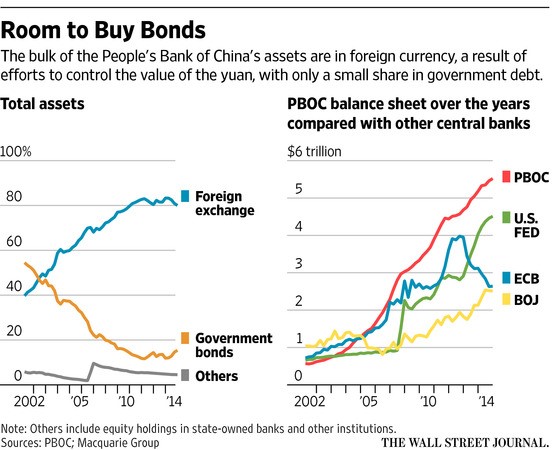
Chinese Academy of Social Sciences(CASS), released the latest government balance sheet earlier this week. According to the data, by the end of 2013 China's government liabilities were more than 56 trillion yuan, increasing nearly 20 percent from a year ago. Meanwhile, the assets were about 112 trillion yuan, up about 10 percent year-on-year.
Generally speaking, the budget and final account of modern financial system is compiled on cash accounting method. The People’s congress will define government fiscal responsibility and roughly estimate fiscal expenditure to adjust tax collection. This idea could reflect the flow of fiscal revenue and expenditure.
Nonetheless in reality, governmental fiscal responsibility is not only for the present, but as a promise for future such as sustaining pay-as-you-go pension system, assuring good public service, etc. The expenditure obligation hidden behind those promises may outdistance the future fiscal revenue, which causes governmental debt risks. Greece is one of the best examples, of which current circumstance is that the outrageous and rising social welfare finally drag down the finance.
Therefore, we shall calculate the assets and liabilities in actuarial based on each level of government so to measure the fiscal health in medium and long term. In the past few years, China’s local government debt risk has drawn public concerns. In accordance with Budget Law and relevant documents, the balance sheets of local governments shall be released to the public in 2020. In this way, assets and liabilities will be open.
The first to be affected are debts as well as contingent debts that local governments are obligated to pay, which is about 20 trillion yuan. The second to be affected are the government bond and policy finance bond that are issued by the central government (and relevant institutions), which is also about 20 trillion yuan. What’s more, the obviously emerged potential gap of social security funds is about 10 trillion yuan, estimated by the institution.
From the data we can see that even if the governmental liabilities are huge, each level of Chinese government owns more assets in contrast—its asset scale is twice of the liability. Therefore, the overall debt rate of the government is not that high. Besides, the assets held by government include the most valuable rights of using land resource and sorts of industrial franchise.
Li Yang, the former Deputy President of CASS, said that China's broadly calculated sovereign assets totaled 227.3 trillion yuan, while sovereign debts reached 103.2 trillion yuan. Then the chance for a sovereign debt crisis in China is slim. This opinion could represent most experts focusing on Chinese government debts.
However, the government debts are real and rigid, which must be paid back. Any default of government debt would thoroughly increase government financing cost and exacerbate related debt risk. Relatively speaking, it is exaggerated to say that the government’s assets are huge. The domestic currency cash and foreign reserve from reliable nations are the hard currency of governmental held assets, which have a good liquidity and the asset price will not be affected by business cycle too much.
Although the current state-owned enterprise assets held by the government are fine for now, its operation persistency mostly relies on administrative monopoly, low financing rate (governmental credit support, etc.). During the fluctuation of business cycle, the SOEs’ adjustment reacts more slowly than private companies. Both economy downturn and marketization of the industries could affect the business performance of SOEs. The SOEs stuck in operation crisis are not assets any more. What’s more, it could become the burden of the government since it could neither go into bankruptcy nor lay off employees. We shall never forget what happened to the SOEs in 1998 reform.
As the “national accounting book”, the real meaning of the balance sheet is to understand its finance situation, especially to help the government to acknowledge the medium and long term debts. However, the government shall never take this issue lightly when the assets on account book are far more than the liabilities. For the government, the maximum assets are and will always be a thriving and healthy economy. Only the enough tax brought by a thriving economy could be the best support for the government to pay its debts.
Published in The Beijing News | 2015-8-7


