

New roles of CSF
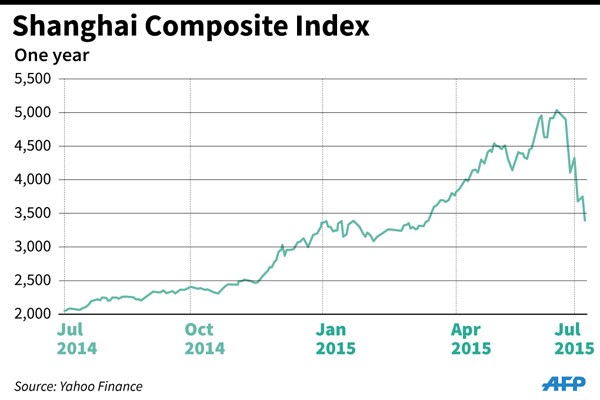
At the beginning of July, China's A share index underwent a wave of sharp decline. In order to avoid systematic risk possibly triggered by the plummeting share price, authorities including PBOC (the People's Bank of China) and the CSRC (China Securities Regulatory Commission) have all promulgated bailout measures, among which, the stock buy-in measures are most concerned by the investors. And China Securities Finance Corporation Limited (CSF) is the main trader for the said measure.
China's securities margin trading market consists of two levels: the first level is the margin trading provided to investors by securities traders, in which, investors borrow money and stocks by taking their own funds and stocks as credit extension; the second level is margin trading provided by CSF to securities traders, meaning that securities traders, with the purpose of enlarging their margin trading business provided to investors, need to borrow funds and stocks from the CSF, which we call as credit financing. The sources of the funds and stocks lent out by CSF are generally banks, other securities traders, insurance companies and social security fund.
This kind of institutional arrangement is made on the basis of China's reality. It is hardly that Chinese securities traders can copy American investment banks. The scale of such securities traders is far smaller than banks and the money raising ability is also weaker than that of banks. When it comes to financing demands requiring large sums such as bond underwriting and merger & acquisition, securities traders are seldom competitive with banks. This shortcoming is even more obvious in margin trading business. Their own capitals and stocks of securities traders are relatively small. If they want to expand their margin trading, they have no choice but to borrow from outside. However, in the inter-bank market, securities traders are not the major transactional counterpart for banks. They cannot borrow from the banks or insurance funds by unsecured credit financing but can only by pledge of assets, which means, the convenience and financing scale of such traders are inferior to secured interbank lending.
CSF plays the role as borrower for the securities traders. The funds and stocks of other organizations converge on the CSF and the latter "wholesale" them to the securities traders who consequently "retail" them to the investors. CSF's role is of a monopolizing nature.
It is just because that the CSF is the liquidity provider of securities traders, the hero of this round of bailout is thus CSF. At this moment, CSF is endowed with new roles:
First, as central bank is the liquidity provider for CSF, CSF is also the liquidity provider for securities traders with the purpose of avoiding liquidity shortage in securities industry. For instance, on July 9, PBOC stated that it would assist CSF in obtaining sufficient liquidity and secure, on the basis of its own credit, the issuance of short-term financing in the inter-bank market by CSF.
Second, CSF will directly participate in the transactions in the secondary stock market so as to stabilize the market sentiment. From July 4, CSF has raised hundreds billion of funds. By purchase of blue chip ETF and small and medium-sized listed enterprises, it had successfully push the share price going up, leading to rise in price of the majority of the listed companies in 9-10 of July. This made CSF the de facto stabilization fund for A-share market.
Looking back, CSF has actually congenital problems. The business of CSF is essentially absorbing funds (stocks), and lending money (stocks) to securities traders. It functions similarly as the banks while it is not simply a financing intermediary. Such being the case, CSF should be supervised in accordance with standards for banking supervision (as well as Basel III Accords) and be incorporated under the supervising frame of CBRC ( China Banking Regulatory Commission ) and PBOC. When CSF was originally established, the regulators shall prepare Plan B for the risks that the margin trading market may be subject to liquidity crisis. As an important financing institute similar as banks and of relatively systematic importance, the PBOC should be the lender of last resort for CSF. Obviously, none has foreseen this.
Besides all above, if CSF wants to undertake the new role as the stabilization fund, there are other problems pending. Firstly, it should clarify what is the triggering factor and what is the target of saving the stock market? Is it arising out of the stock index slump, or systematic liquidity risks of important securities traders, or otherwise. For this time of bailout, it is lack of mutual recognition between the public, securities traders, and investors with respect to its objects and targets, and the bailout execution process itself is not in good order. Slightly rally of the stock index could result in violent resurgence in folk financing, a spontaneous result of the expectation held by investors that the government will not allow the stock index to fall further. Secondly, the most controversial problem of stabilization fund is violation to the fair trade principle of the stock market. During this stock market bailout, it was the CSF who finally decided which share to be drawn up, which consequently soared to limit up and others limited down. The fairness of the bailout is under questioning. If CSF wants to fully exert its role as stabilization fund, specific measures for bailout are still in need of earnest consideration.
Published in the Xinmin Weekly| 2015-7-15


