

Hong Kong's economy is not free
Hong Kong’s economy is famous for its "freedom" and the government also implements the laissez-faire economic policy. Besides, because the Hong Kong government has integrity and efficiency, perfect rule of law, good property rights protection, simple and low taxation and monetary stability, and Hong Kong has high quality of the labor force, most economists think that Hong Kong is the most outstanding in the market economy. However, there are many matters happened in Hong Kong in recent years, not only causing conflicts between Hong Kong and the mainland, but also accounting for the background of “Occupy Central” and requiring really universal suffrage. I named these phenomena and trends as "Hongkongnization ".
What is Hongkongnization? Intuitively viewed, it is mainly embodied in three aspects: first, the high price of house and the cost of living; second, the large gap in income and social capital with weak social mobility; third, conflict between the local and foreign residents is obvious. However, high housing price is the main cause.
The limited land supply promotes Hongkongnization
High property price, of course, is because the Hong Kong government never control housing price; the income distribution disparity and wealth gap is bigger, because Hong Kong does not adopt progressive tax and inheritance tax. Therefore, a lot of people own the present status of Hong Kong to laissez-faire policy. For example, single low taxes protect the interests of the rich; not to interfere in the market makes the monopoly plunder the interests of ordinary people.
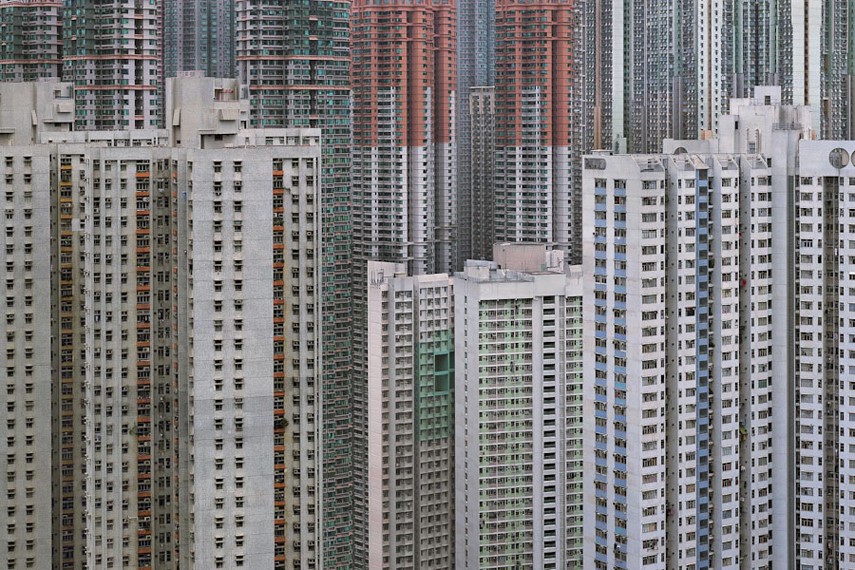
The statement appears to be right, but actually Hongkongnization has other reasons; the key is the limited supply of land. Hong Kong's land is valuable and the population density is much higher than Shanghai and Beijing, but in the name of ecological protection, as much as two-thirds of lands in Hong Kong are not used for the construction land development.
According to data from 2000 to 2013, in 13 years, Hong Kong residential land only increased by 900 hectares, 100 hectares less than a whole year of Shanghai housing land supply in 2013, with the average annual increase of 70 hectares, only one fourteenth of that in Shanghai. Land for commercial use is less and only increased by 100 hectares 13 years, with annual average increase of 7.7 hectares.
In essence, it can be attributed to Hong Kong's "land lease" system. The interest groups have no incentive to let go of land supply to tame prices. Hong Kong's unique land public ownership makes the government become the owner of the land; it can earn income by selling land; this time, the government has become stakeholder in the land market; it is more concerned about the stability of land auction revenue each year, but not house prices and the difficulty for residents to get the property.
In nearly30 years, the Hong Kong housing cycle can be divided into three stages: the period from 1985 to 1997, the period from 1998 to 2003 and the period from from 2004 to now; the three periods are corresponding to three things:
First, the Sino-British joint declaration was signed in 1984. Hong Kong property prices rose with the Sino-British joint declaration; the declaration stated that in the transition period (1984-1997), each year, the UK can only sell 50 hectares of land. At first, China's concern was that if the UK overbooked land, Hong Kong would have no land to sell in the future. This policy objectively restricts the land supply, becoming the foundation for Hong Kong house price to rise for a long time; from 1986 to 1997, it maintained an average annual 23.08% growth and the growth is more than 42% in 1992.
Second, with the Asian financial crisis in 1998, Hong Kong became a major disaster area in the financial crisis. Hong Kong property prices fell rapidly from the highest point in 1997; the average drop speed was 15.05%; in 1998, it dropped by 31% and house prices reached a recorded lowest point in 2003.
Third, the new land lease system and CEPA started. In 2003, developers did not dare to make land development and the government also could not sell land under poor housing market. To this end, the Hong Kong government introduced "nine measures to rescue the market" in 2002, including stopping land supply and public housing construction (eighty-five thousand suits a year), monetary easing policy, etc., and in 2004, the "land application list mechanism" was introduced to maintain land price.
After that, Hong Kong and the mainland signed the CEPA agreement; the mainland residents could travl freely in Hong Kong, greatly expanding the Hong Kong residential demand; at the same time, the year of 2003 welcomed a golden decade for income and wealth growth of mainland residents; a large number of mainland residents went to Hong Kong to buy houses. More scarce land supply policy (less supply) and larger purchase crowd (more demand) becomes the main support point of the booming Hong Kong property market in the past ten years, with the average annual growth of 15.69%; in 2010, the housing prices return to all-time highest point in 1997; the growth rate was as high as 21.12%. By 2013, the average price of Hong Kong has been as high as 126000 Hong Kong dollars per square metre.
Land lease, of course, does not necessarily lead to higher prices, but limited land supply is the main reason of the rising housing price. Limit of 50 hectares in the Sino-British joint declaration is an occasional exogenous factor, and the shortage of land market thus generated guarantees the rising land prices for a long time; by 2002, although the land auction went unsold, but the Hong Kong government was in no hurry to sell at that time, in order not to let land prices fall too much.
How can land scarcity affect economic freedom?
High house prices caused by land scarcity originally will only affect the real estate market. Although monopoly will affect the economic efficiency, as technology advances, there will always be innovation hitting the monopoly’s position. If Hong Kong is really an area of laissez-faire, it obviously doesn't need to worry too much.
However, the monopoly of land is obviously unable to be changed by technological progress. The government is not the only large landlord in Hong Kong; major properties developer including the new world, Sun Hungkai, Henderson began to collect "land exchange certificates" and farmland in the 1970s for land reserve; the land can be used for residential and commercial land development through the change of land use planning, making them become the landlord outside of government. By the end of 2009, only Sun Hungkai and Henderson had 527 hectares of farmland for development, equivalent to seven times of average annual quantity in the last 15 years in Hong Kong. The government's strict control of land supply makes land price keep high; as long as there is land reserve, real estate business can guarantee high yield.
Here comes a problem. Land market monopoly makes several big land reserve developers have congenital advantage. In the economic and regulatory environment of laissez faire without restricting monopoly in other areas, with the advantages of land development, a few family businesses (and other real estate companies) get profit in residential construction, commercial development and property management. After that, they use the money to buy other assets, start from public utilities and penetrate to the food, clothing, living and transportation sectors. Because the area of Hong Kong is small, even such a strong competitive food and beverage industry is also easy to form a monopoly. A few family businesses represented by Li Ka-shing, Cheng Yu-tung, Lee Shaukee, Guo brothers, Peter Woo and Jia Daoli almost took control of Hong Kong's most important commercial institutions, including Hong Kong’s only two electric power companies, water company, gas company, two absolute monopoly of department stores and hundreds of companies. One-day life of a person in Hong Kong is difficult to avoid dealing with these family companies.
In Hong Kong, quite a majority of enterprises and individuals act as the role to work for the government and big family businesses. Only a handful of industries such as finance can be immune, but it involves fewer employees, benefits only a few people and is irrelevant to life of the vast majority of people in Hong Kong. These industries, at the same time, are capital-intensive and social capital intensive; the success depends more on congenital factors. For other industries, in the case of a continued floating population, capital erosion to the labor allocation is inevitable.
Therefore, we see that the managers and professionals working in financial institutions have increased income than in the past, but the revenue of the same position in other industries such as transportation, warehouse, retail and trade declines. Wages of workers with low technology in service sectors stag and decline. For employees with post-secondary degree and advanced degree, the median monthly income has respectively declined from 16000 yuan and 23000 yuan in 1999 to 13000 yuan and 22200 yuan in 2009 without the consideration of inflation.
Hong Kong's economy is not free
Hong Kong has simple regulation policy and less economic intervention; the majority of the industry belongs to laissez-faire economy, and strict control is implemented in only a few industries such as the land, but this is just a kind of worst freedom. The strict control in land policy and other key industry guarantees the interests of large developers; under this premise, the laissez-faire policy means allowing these developers to make abuse of dominant market position and squeeze the survival space of the small and medium-sized enterprises and increase trend of monopoly. This is not the intent of laissez faire.
The few big companies and families with the role of monopoly in basic industries concerned of the people's livelihood, public utilities and real estate is easy to extract economic rent for competitive industries and consumers in upstream and downstream enterprises. It is a disguised channel to absorb social resources. Under the premise to ensure their monopoly, allow upstream and downstream market to make free competition and enable them to make abuse of the dominant position with diversification and acquisition of upstream and downstream enterprises, forming the horizontal and vertical integration. What is the difference between the role of National Grid, Petrochemicals and Telecom in the Chinese mainland? How can it be "free economy"?
In 2006, the Hong Kong government began market intervention policy and some economists think the current Hong Kong deviated from the tradition of free market. However, Hong Kong was not free from 2006, but was no longer free from 1984. Today's Hong Kong only uses the coat of laissez-faire to cover the monopoly under the control of the amount of land supply.
Published in FTChinese


