

Law enforcement at will is more severe than selling fake
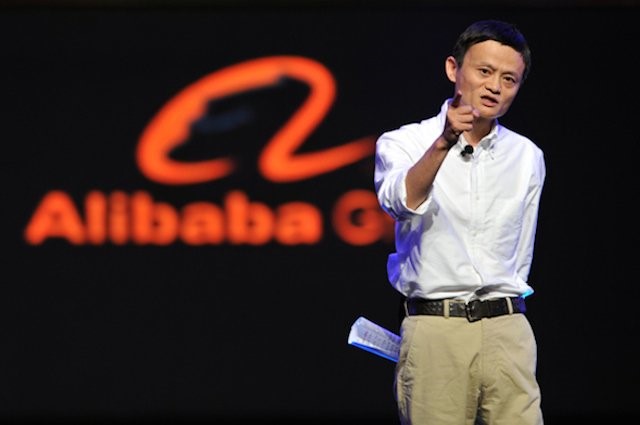
Recently, the State Administration for Industry and Commerce (SAIC) published a white paper regarding Taobao, which showed that only 37.25 percent of surveyed commodities sold on the website were authentic, lower than a 58.7-percent average of major online shopping platforms. Later on, Taobao fired back and said it was unfairly treated. It claimed the inspection was flawed in logic and contradicted previous data, pointing out the authority only made a sample of 51 items which cannot represent the enormous trade volume on the platform.
As to the response of Taobao, the SAIC only simply denoted: “it was only a result of spot check, so we cannot interpret it in an excessive way nor extend to the problem of unfairness”. Therefore, the discussion which was originally about technique was stretched to a non-tech one. As a regulation department, the SAIC must reply to the problem on whether there was deviation in spot check, which was also the source of law enforcement authority of government sectors.
What was more casual was the evolution of this event. On 28th day, the SAIC suddenly changed its attitude from former composure to strictness, and unveiled the White paper which hadn’t gone public before onto its official website, severely censuring Alibaba from not strict subject admission, ineffective investigation of commodity information, and other three aspects.
However, no matter the former hide for Taobao or later shocking spot check result, they all reflect random administration and law enforcement in essence. But in China, people seem to have been accustomed to this kind of randomness, and it seems that all will end in such kind of randomness. Yet the SAIC’s shifty response didn’t end at this point. Afterwards, the “White paper” disappeared from the official website of the SAIC.
With regard to the at-will enforcement of the SAIC, the outside world, on the contrary, took it seriously, which was in evident contrast with that of the state agency. Although the “White paper” disappeared, it made the event catch more attention. According to the content of the “White paper”, American law firm Robbins Geller Rudman & Dowd LLP declared to file a lawsuit against Alibaba and some senior executives to New York Federal Court for being suspected of violating Security Law. This event is a customary law enforcement game in our country, but it becomes serious when going abroad.
In confrontation with this case, the SAIC came forward to alleviate the situation and denoted that the White paper had no legal force. Later, Jack Ma held a friendly talk with the director general of the SAIC and the situation promptly cooled down.
Seeing from the whole process, it is superficially a problem of fake goods but actually the at-will enforcement of administrative authority. And it reflects the failure of rule by law.
Indeed, there exist many problems in Taobao. Although the source of fake goods is not from Taobao, it shall assume joint liability on production and manufacturing pursuant to relevant laws within the range of “obviously knowing the truth and being supposed to know the truth”, while the SAIC also has the power to require Taobao to cooperate in cracking down fake. More importantly, Taobao itself is a platform, and all merchants on it are all legal persons independent of Alibaba. Their deeds have no legal obligation relation with Alibaba, therefore Taobao is unable to be responsible for all the activities of them on it.
According to relevant laws, Taobao should stop providing service to merchants selling fake goods and notice the law enforcement departments when it “obviously knows or is supposed to know” the situation. Here, the “obviously knowing or being supposed to know” means that the facts should be known or are able to be known under the current conditions, rather than facts to be known with efforts. The boundary for “obviously knowing or being supposed to know” is ambiguous, but should not be expanded at will or become moral appeals of administrative departments on enterprises, or make the administrative departments transfer their responsibilities to enterprises.
If it is because Alibaba earns money through the operation of platform that makes it be responsible, then the SAIC also should be responsible for this because its operation depends on fiscal revenues. After the merchants obtain business license upon approval, the SAIC shall assume supervision liability on their behaviors. When it finds merchants approved by it selling fake, the SAIC will have law enforcement rights and should investigate the merchants directly, just like a police finding a thief on a bus and stopping the thief by directly showing his certificate, so the reason is very simple. If the police does not stop the thief and criticize the conductor for being not responsible instead, it is not moral, as well as undoubtedly ridiculous. However, the reality is so ridiculous. The SAIC finds fake goods and turns its own responsibility to enterprise’s liability and moral pressure instead of investigating by itself.
Certainly, the appearance of Taobao has changed commercial type of operation and deepened the difficulty of industrial and commercial law enforcement, but this is a new problem to be faced by the SAIC. As long as the legal relation has not changed, the law enforcement rights on investigating fake goods will forever lie between the SAIC and independent merchants.
Administrative organizations should have their own administrative ethics. The so-called rule by law means all should go according to procedure and each step should be reasonable and legal. Even though the aims are lofty, we should not achieve them through gray law enforcement. Although Taobao should assume certain liability and hasn’t fully cooperated with the supervision department of SAIC, we should not cause pressure through a spot check full of loopholes which will damage the credibility of authorities. In fact, many people have such kind of experiences that usually relevant supervision departments fail to take regulation and they will have different norms when in need of supervision. Such kind of at-will law enforcement will cause rent-seeking and bribery & corruption at one hand, and result in lack of stable expectation on market, adoption of short-term act and unruly market. The consequences of at-will law enforcement will even expand further overseas in nowadays when China’s economy is more closely related to foreign countries.
Published in FT Chinese | 2015-2-4


