

Striking taxi drivers should look in the mirror
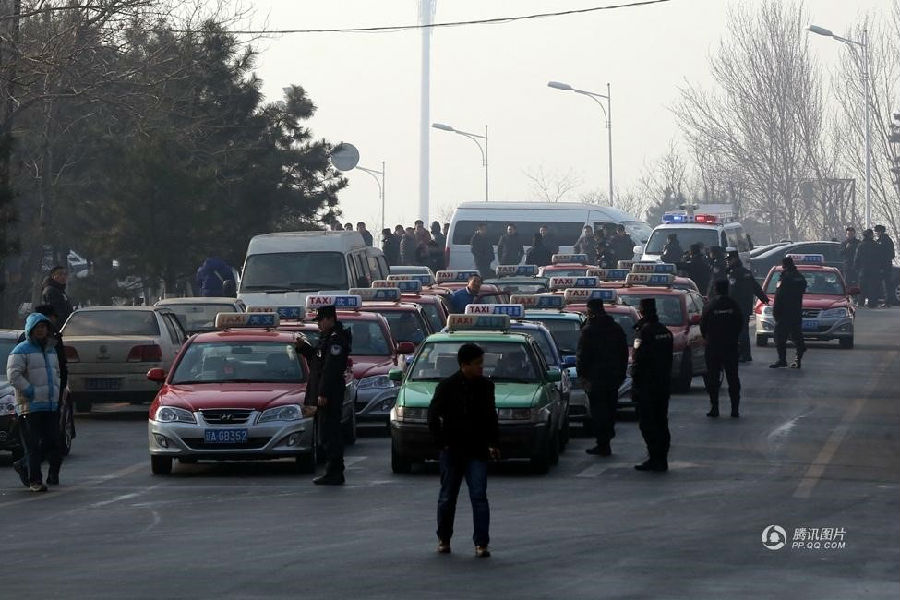
Taxi drivers go on strike in Shenyang, Liaoning Province on January 4. (Tecent Images)
Taxi drivers in Shenyang, Liaoning Province, might have good reason to be angry at competition from taxi-hailing apps, but the most constructive response would be to reflect on how they can win back customers.
Thousands of cab drivers went on a one-day strike on January 4, the first day of work in China after the three-day New Year holiday, causing a disruption in the capital of the northeastern province.
Media reports said the drivers were venting their frustration over regulators' failure to crack down on unlicensed cabs and a government decision to scrap a fuel surcharge that essentially cost drivers 1 yuan per ride.
On top of that, the drivers said that they were upset over a premium taxi service that has been launched by two app companies in cooperation with car rental firms.
The two companies that operate the apps, Didi Dache and Kuaidi Dache, rolled out the service, which is similar to that of San Francisco-based Uber in that it allows passengers to use a mobile device to book transport from car rental companies and firms providing the services of drivers.
This meant that people in Shenyang now had a range of taxi services to choose from.
In the tightly regulated taxi industry, drivers have to pay state-owned taxi companies several thousand yuan per month in fees, another major source of driver grievances.
The strike in Shenyang came as a surprise to many people because taxi drivers actually get subsidies from the app companies for bookings made via mobile devices.
The app firms also occasionally offer passengers e-coupons for the premium taxi service, stoking fears among taxi drivers that they will lose customers. These discounts are a promotion to help the app firms cultivate user loyalty and identify their target customers.
Drivers involved in the premium service say their customers care most about cleanliness, especially that their ride does not smell awful, a problem in some taxis. If we think of conventional taxis as a budget motel, then the premium service is well-rated hotel.
As I was writing this article, a blogger posted something about the strike saying that the striking taxi drivers have shamed Shenyang because they often snub customers and force passengers to share a car with a stranger so the driver can make extra money. "If there is only one word to describe the taxi service in Shenyang, it's bad," the blogger said.
One thing is clear: if the taxi companies and their drivers do not improve their services, they will lose more customers. Walking out on the job does them no good because it just alienates their customers even more.
The best thing for taxi drivers to do is to face up to their competition and improve their service to attract more customers. After all, they have a major advantage: their ride is cheaper.
Published in Caixin.com | 2015-1-4


