

A better solution based on ETC than fuel tax hike
Recently, it has drawn extensive attention that China has increased the consumption tax of refined oil product twice within a week. At the end of 2008 when international oil price was caught in low ebb, China launched a large-scale price and taxes reform on refined oil product. Then, China cancelled toll for highway and raised the tax amount of diesel oil sharply. At present, China’s fuel price has also included consumption tax, value added tax, urban maintenance and construction tax and education surcharge, which accounts for as high as 34% in gasoline retail price including tax. At the same time, there exist excessively high highway toll, and accompanying administrative penalty in China, which causes China’s logistics cost to remain at a high level. Therefore, many people think it is the very time to raise the consumption tax of oil and to further cancel more expressway tolls.
However, one problem is that the current oil taxation carries too many objectives, which is also reflected in the Treasury Department’s planning on newly increased tax revenue. According to the statement of the Treasury Department, the main purposes for including newly increased income in general public budget overall arrangement are to use the money as financial fund in controlling environmental pollution and tackling climate change, and then to promote energy conservation and encourage development of new energy automobile. In addition to keep energy and greenhouse reductions, the fuel tax also has to ensure not to increase the whole economic operating cost, and guarantee people’s living standard, and prevent too heavy burden of taxation. There are so many objectives that they conflict with each other and result in various disputes.
The fuel tax reform being considered is to convert the current road fee into fuel tax. In essence, such suggestion will convert the road fee that each automobile pays into taxes, and thus to reflect the principle of “more use, more expenses” in the background that road and other public facilities are becoming a kind of scarce resources day by day. It is obviously a good thing for the country and for the people to guide fuel consumers to save energy and reduce emission by tax and reach the purpose of environmental protection.
But, it must be seen that China has a vast territory and there exists an extremely large disparity in economic development between different regions. As for some areas, automobile consumption needs to be encouraged, rather than to be restrained. Even for restraining, the degree required also varies in different regions. For example, the money supposed to be paid by an ordinary citizen of Beijing and a herdsman in Tibetan should be different though they drive the same mileage and emit the same carbon dioxide.
However, obviously, as for fuel oil, it is infeasible to collect consumption tax according to different tax rates in different regions. It is impossible to collect fee according to the region for the vehicle drives in the whole country. Moreover, disparity will appear in oil price of different regions if different tax rates are to be implemented, and then the oil will transfer across the regions. So a mechanism must be established to prevent this, which will cost a lot and achieve little effect. This is certainly uneconomical from the cost benefit.
That being the case, the road expense should not be included in oil price. It is seemingly that we’re going back, but, with slight thinking, it’ll be not difficult for you to discover to include road expense in oil price is a kind of compromise based on previously technical restriction in fact. With the development of technology, these technical restrictions have vanished.
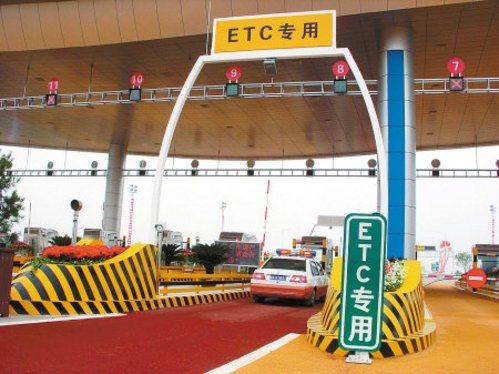
Recently, Xu Chengguang, the news spokesman of the Ministry of Transport, disclosed that regional networking would be realized in 5 provinces of North China, 6 provinces of Yangtze River Delta and Hunan, Shaanxi and Liaoning by the end of this year. Till the end of September 2015, China will basically realize ETC (Electronic Toll Collection) system networked nationwide; Then China will build the longest expressway ETC networking system in the world.
If ETC can be further expanded and accurate toll can be achieved in expressways and urban roads, then automobile energy saving, emission reduction and drive rate drop can be conducted directly, rather than through fuel tax. Apparently, compared to the indirect mode, direct mode will achieve higher efficiency and equity.
Published in 21st Century Business Herald | 2014-12-4


