

Seek changes for the regulation tools of the Central Bank
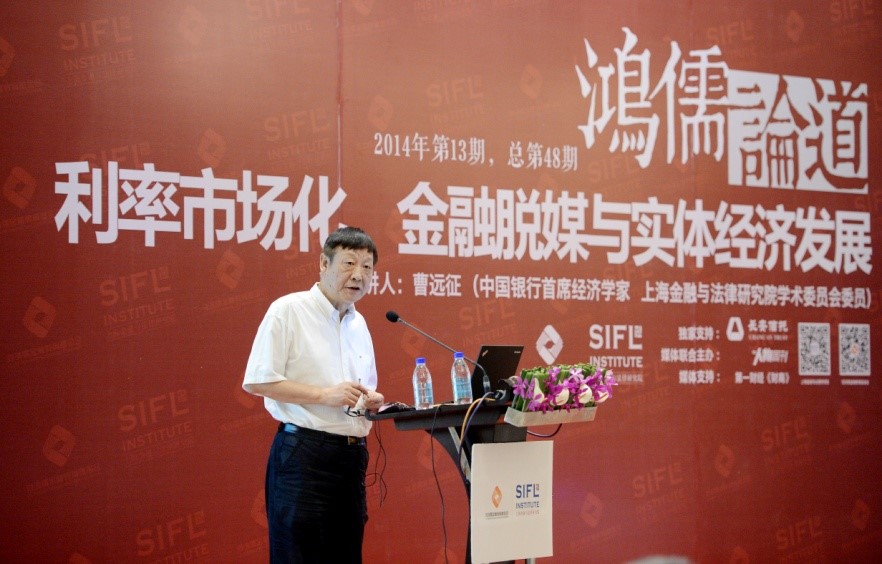
At present, China’s macro economy is facing a dual situation: accumulation of debt risk and transformation potential growth, therefore, there will be correspondingly dual goals for the macro control. Firstly, securing the bottom line of economic growth and secondly, preventing systematic financial risks. Of which, preventing concentrated outbreak of debt default is the focus of the macro control.
At the same time, the marketization of the interest rate is also on the way. Changes of the external market and the RMB exchange rate fluctuation has reversed the volume of China’s foreign exchange which has gone through rapid growth over the past years. This combination of factors poses new propositions for the Central bank as for regulation.
In this case, it is expected that there will be dual targets for the regulation of the Central Bank.
On one hand, monetary policy will still function to stimulate the general demand, thus to prevent rapid declining of economic growth, as it always functioned; on the other hand, as the lender of last resort, China’s Central Bank should prevent the concentrated outbreak of debt default and ensure debt sustainability, and this is the core significance of “micro-stimulation”. Under current macro economic situation, obviously, the second target was more important.
Future monetary policy will focus on solving the problems of difficult to get loan or expensive loan. It is expected that the Central Bank will still adopt the prudent monetary policy. Due to the downward pressures on the economy, the monetary policy will be prudent as well as loose. One thing is to guide the interbank rate to stay in a rational range; another thing is to expand the scale of refinance and provide targeted support for the “three dimensions of rural issues”, shanty town transformation, water conservancy and other related industries and fields.
What is noteworthy is the regulation of the Central Bank is facing some new changes。
Firstly, under the background of the interest rate marketization, the regulatory tools of the Central Bank are becoming fewer. Right now, bank loans only account for half of the entire social financing, which means the regulation to control the scale of loans will be less affective compared with before.
Or put it another way, although the monetary policy is committed to solve the problems of difficult to get loan or expensive loan, but during the process of interest rate marketization, the relation between interest rate and bank risks is becoming closer while the relation between interest rate and the Central Bank is waning, hence, if the Central Bank is still using the old measures to control the market, the effects would be lame.
In consideration of this, the Central Bank proposed to improve a market-oriented indirect regulation mechanism in as early as 2012. The mechanism aims to convert the monetary policy from quantity-oriented to price-oriented, thus the market will be more sensitive towards the interest rate. From a broader sense, interest rate marketization not only refers to the form of a competitive market interest rate, but also refers to the establishment of the macro control mechanism of interest rate.
In addition, following the sharp drop of the volume of foreign exchange in May, the first negative growth of foreign exchange of this year appears in July. It means that the convention to put basic currency on the basis of foreign exchange is being broken. The Central Bank will consider how the basic money should be put into the market if the growth of foreign exchange slows down or even be negative.
Faced with the above situation, the Central Bank should seek changes in regulation tools and regulation approaches.
After creating short-term liquidity operations (SLO) and standing lending facility (SLF) in the open market, the Central Bank has brought forward another measure in terms of monetary policy, that is, pledged supplementary lending (PSL). It is reported that the Central Bank provides a 3-year 1 trillion yuan PSL for the CDB and the CDB has recently withdrawn 400 billion yuan for the lending for projects related to shanty town transformation.
PSL, on one hand, functions as a basic currency supply channel to alleviate high credit risk of refinancing; on the other hand, PSL interest rate can serve as the benchmark of policy interest rate, and consequently authorities can guide the market interest rate through adjusting the PSL interest rate.
Since the guarantees of PSL are mainly loans, it will also serve as an incentive for bank loans on the balance sheet, supplementing basic currency and promoting the expansion of bank assets.
Nevertheless, tools like PSL are not fundamental measures. The Central Bank should consider to establish an important mechanism to convert some parts of required reserves of commercial banks into government debts, thus to seek new ways of regulation.
To be more specific, the Central Bank should consider about lowering the rate of the required reserves for commercial bank and use the released money to purchase short-term government debts, and furthermore, the Central Bank could control the volume of the basic currency put into the market through open operations in the government debt market, thus to adjust the interest rate and market liquidity.
Published on ENNWEEKLY.COM


