

Food safety issues in China are bigger than Shanghai Husi
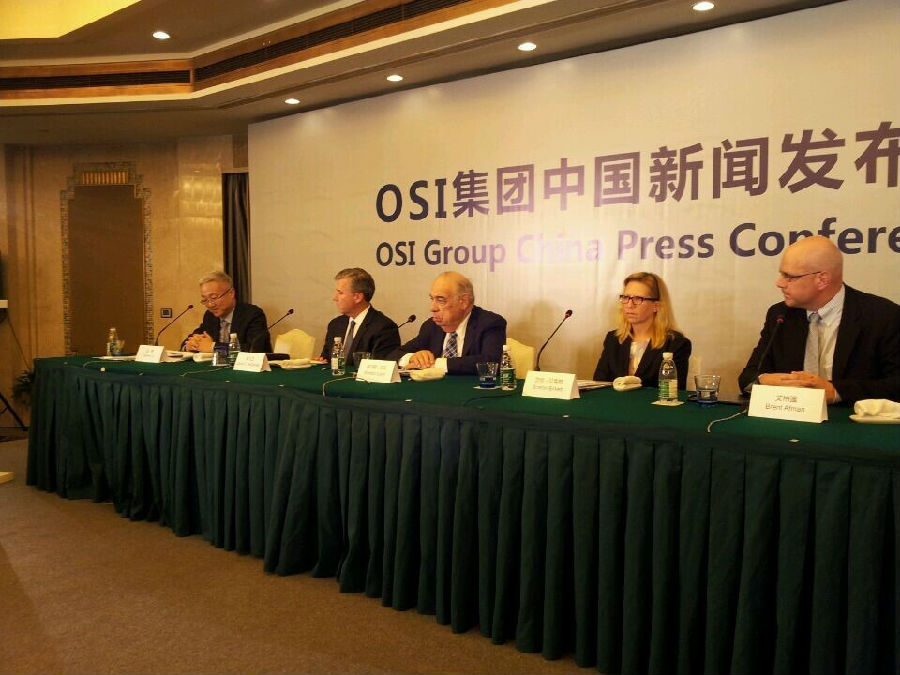
The scandal of Shanghai Husi’s selling expired meat triggered hot public debate. As It is reported, Shanghai Husi is the meat supplier for a wide range of transnational fast-food chains such as McDonald’s, KFC, Pizza hut, Starbucks, Papa john’s pizza, Yoshinoya, Dicos, 7-11, Burger King, Subway. Therefore, the Husi scandal quickly caused a ripple among foreign catering enterprises.
Foreign fast food: easy introduction in terms of manufacturing, but hard in terms of standard
Shanghai Husi, established as a solely foreign-funded company in April 1996, is a member of the US OSI Group. OSI is a global food-processing giant as the long-time partner with many well-known international fast food chains such as McDonald’s and Yum! brand Inc. Its main business covers manufacturing and processing of meat, seafood, pastries, rice and vegetable products.
For years, food safety of foreign food enterprises were taken as granted. However, after previous scandals of McDonald’s and KFC, people began to feel uncertain about foreign owned food companies. And for this time, even worse, the food safety scandal of Shanghai Husi marks a massive retreat of foreign food firms from the entire food safety chain.
The irony is, the development strategy of Shanghai Husi is, paradoxically, to achieve “importing standard and local manufacturing”.
Of course, as a huge food production enterprise, the regulations of Shanghai Husi must be very strict and Husi did make extremely detailed records of regulation violence incidents in Husi’s internal public emails. However, when it comes to actual operation, such data can be freely modified. It is just because of such fraud which can bypass those seemingly strict regulation systems, the standards can’t work.
Thus, as we can see, introducing of manufacturing is easy, but to fully implement the standards for manufacturing is rather hard. The business standard, although formal filed, is in nature only an internal management tool. And speaking of the ultimate drive of the internal management, it should be external competition, law regulation, media supervision, and even the self moral discipline of the end production practitioners. The combination of all these external elements get together to become what we call The System.
When buy a good, we at the same time buy the “local system”
Sometimes, to strive for a better system, Chinese enterprises should go global.
In 2014, domestic infant milk powder producer Shengyuan entered into cooperation with the top dairy group of France Sodiaal. Shengyuan invested 100 million Euros to build France based factory, whose products all go to the China market. Beside Shengyuan, Yili, Guangming, Yashili also have their respective factories in New Zealand. It seems that “go global” has become an inevitable trend for Chinese dairy enterprises.
Why do Chinese dairy enterprises invest to build factories outside China? On the one hand, they want to get close to raw materials and seek for quality dairy sources. On the other hand, invest their money into a more strict food safety system can win customer confidence, which means, a larger market share and a fatter profit. This is obviously another important reason.
Indeed, it is not the dairy companies who did the choice but the Chinese customers who did. The milk powder scandals of domestic manufactures have pushed Chinese parents to try their best to buy milk powder from outside China. If we say that Chinese customers do not trust domestic milk powder, it is not that difficult to understand. However, it is not only an issue about domestic milk powder. Chinese parents even do not trust imported milk powders which are only packaged in China. In order to buy authentic foreign milk powder, they fly to foreign countries, they search on Taobao.com for global shopping service, or they choose to only purchase milk powders which are marked “packaged outside China” from domestic supermarket. To some degree, what Chinese is pursuing for is only a seal on the milk powder package.
But what does this seal mean? It means law, tradition and culture. It means that the milk powder is manufactured under strict law regulation and prudent contract spirit. To buy milk power in foreign countries is, in essence, to buy the local system of original manufacturing place of the milk powder. And the dairy companies are thus driven by their customers’ requirements to build foreign based factories.
Hence, we can say that we need to introduce catering enterprises such as McDonald’s, KFC, Pizza hut as well as food material companies as in this case, OSI group. But what we cannot neglect is along the introduction of such manufacturing segment from foreign countries, we should also introduce The System, like the strict foreign laws and protection measures of the customer interests. These are all of great importance for the improvement of China’s food safety. And just like what exactly happened for this Shanghai Husi scandal, media expose first and then relevant government authorizes involved in investigation.
Nevertheless, rather than these visible systems, the ultimate solution of a longer term is the establishment of contract awareness and law awareness of Chinese people.
Published on The Beijing News | 2014-7-24


