

Deepen railway reform from reducing investment
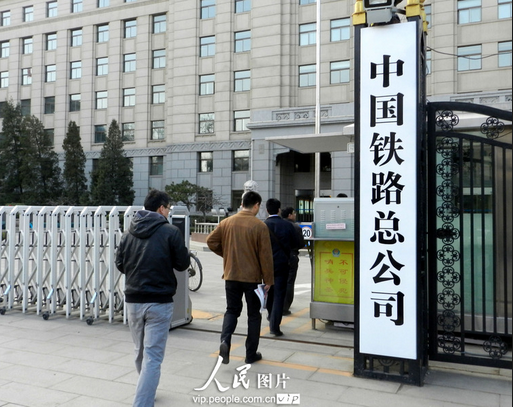
According to media reports, a proposal to deepen railway reform drafted by the National Development and Reform Commission will be released by the end of May. Then, the debt-laden State-owned China Railway Corporation (CR), which was separated from the former Ministry of Railways, would be allowed to developing the land along the railway.
Why would CR involve in real estate development projects along the railways? Obviously, the reason lies in its great financial pressure. Railway constructions are far short of money: as stated by CR recently, it will add the total investment to $128 billion, with an increase of 14.3%. Then, the money earned by rail transport is far from enough. As regard to CR’s revenues, although the number of rail passengers increased by 8% from January to April of this year, rail cargo volume fell by 3% at the same time. As we know, passenger service from rail hardly made a profit while freight rail can, and the reduced rail cargo volume made CR’s cash flow much tight.
However, railway land development will smooth CR’s current financial pressure? I don’t think so.
Firstly, land development is very professional, and CR is not so able to operate it well. It is reported that the so-called comprehensive development of railway land is the effective use of the railway superstructure, underground space and the adjacent land for comprehensive development based on railway construction, improving land use efficiency to promote economic development along the route.
Secondly, land development also needs large amounts of cashflows, not less than the rail construction investment. Just the other day, a research report of TOP 10 listed real estate companies in 2014 showed such companies’ averaged asset-liability ratio is 64.17%, reaching the highest level in nearly four years. Besides, there are big drops of return on equities (ROE) of listed real estate companies. The averaged ROE of those listed in Shanghai and Shenzhen fell to 12.26% in 2013, with similar EPS of their shares in 2012. So, CR as a company focused on rail operation, it can’t make greater performance than those real estate companies.
Moreover, the inconvenient truth is that real estate market has stepped into a turning point with the declining house price in the lower-tier cities. As a common real estate company, it can avoid investment in the unsafe cities. But lands of CR are across the country, and some lands in lower-tier cities will inevitably be developed. And most of CR’s lands located in remote city suburbs, it can hardly support a new city center in lower-tier cities with net population outflows.
Then, how to smooth CR’s financial pressure? In my opinion, the only way is to reduce the railway construction investment.
Published on China Times | 2014-5-22


