

An Analysis of and Outlook for China’s Reforms
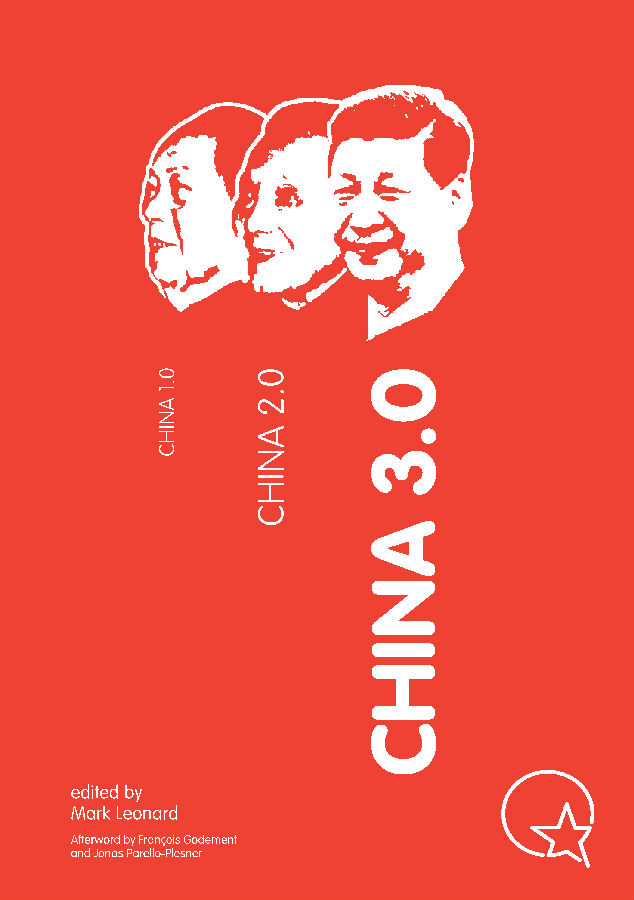
China 3.0 comprises dozens of essays written by leading Chinese intellectuals, including left-wing economists Prof. Cui Zhiyuan of Tsinghua University, Wang Shaoguang, and Pan Wei, who oppose China’s current economic policies, right-wing economist Zhang Weiying and Hu Shuli, Chief Editor of Cai Xin, as well as Yu Yongding (macro-economist) and Justin Yifu Lin of the middle faction.
Based on the essays in this book, the following is an analysis of the crisis China is facing now, their roots and possible solutions. In addition, let’s see what the resolutions of the 3rd Plenary Session of 18th CPC Central Committee have in store for us.

In The Chongqing experiment: the way forward for China?, Cui Zhiyuan discusses China’s land reforms. The core issue that lies behind the huge rural-urban gap and growing protests around the country is land ownership. Currently, there are two types of landownership in China: owned by the state (as seen in urban areas) or collectively (as seen in rural areas). As the land rises in value, the type of ownership has made great difference in the benefits from property transactions, that is, when urban citizens sells their property, the profit, subject to a small amount of tax, is largely intact and belongs to the seller; while for rural citizens, their land is expropriated by the government at a ridiculously low price. Then the government sells the expropriated land at a high price to property developers. This means that the ownership of rural land cannot earn rural citizens their first pot of gold as they become urban citizens. No wonder they are not happy with land expropriation and protests are rising drastically. Therefore, land reforms are the key to resolve urban-rural income distribution gap.

In The Guangdong model in transition, Prof. Xiao Bin of Zhongshan University focuses on the economic model of Guangdong. In contrast to the Chongqing model in which the government dominates all economic activities, Guangdong government interferes relatively little in the economy in that there are few state-owned enterprises in Guangdong and fewer permits required by the government for running businesses. Until now, there remains a general exodus from Chongqing remains while Guangdong is still a popular province for immigrants. On the other hand, there appears to have more protests in Guangdong while few news reports of protests emerge from Chongqing.
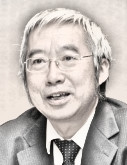
In Restructuring over growth, macroeconomist Yu Yongding puts macroeconomic control policies of China’s central government into the spotlight. In the past 5 years, the economic policies of Premier Wen’s government are marked by four trillion stimulus package in response to the global economic slowdown. Its nature is government interference in the economic cycle. Obviously, such interference could result in severe side effects namely rising property prices and income gaps.
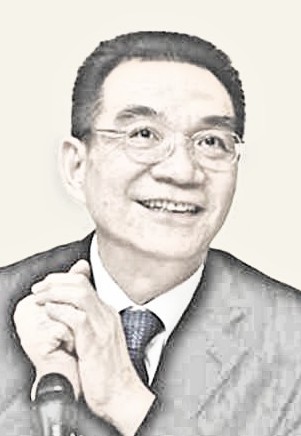
Justin Yifu Lin enjoys a reputation of China’s chief economist. Differentiating from traditional right-wing economists’ values on freedom of property rights and free markets he stresses enterprises’ self-survival capabilities. In China’s potential for sustained dynamic growth, Justin proposes that advancement in technology is the core drive of China’s future economic growth. His view conflicts with Yu Yongding’s opinion. What is the core factor behind China’s future economic growth? Justin maintains that advancement in technology lays the foundation for reforms while Yu thinks structural changes are already reforms.
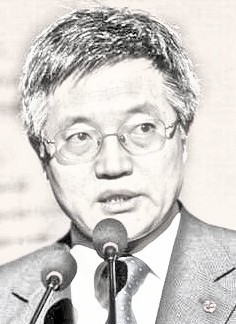
Zhang Weiying is a right-wing economist, who believes in free market and limited government. In From privilege to rights, he criticizes criminalization of fund-raising. He disapproves of the way China’s capital market is in tight control by the government. The real issue is who sets the price of capital.
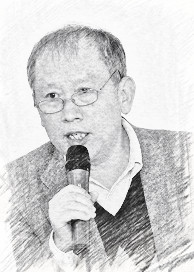 Wang Shaoguang is a chair professor in the Department of Government and Public Administration at the Chinese University of Hong Kong. His most well-known publication is State Capacity of China (1993) co-authored with Hu Angang. This publication outlines the framework for China’s economic development since 1994, in which powers are concentrated in the central government. Former Premier Zhu Rongji during his rein in the state council might have been inspired by Wang Shaoguang’s ideology. Chinese socialism 3.0 discusses which road of development China should follow: capitalism or socialism? An implicit argument is whose contribution it is behind China’s economic achievement? Wang attributes it to the leadership of CCP and China sticking to the path to socialism. He blames China’s problems on straying away from the path to socialism and erosion by capitalism. Wang’s view is that the government should provide for most public goods and services, including all basic necessities. His ideology echoes what was practiced in the period of Cultural Revolution.

In China: Staying on track, Hu Shuli puts her hope on the wisdom of CCP to stick to the right course and not to repeat past mistakes.
The above essays cover a wide range of aspects; however, there is one fundamental aspect, the core issue that is still pricing. We can divide China’s economic growth into two periods. The first period is the marketalization of the price of production, that is, the prices of commodities are determined by the market. For any commodity, the more severe in shortage, the higher its price is; the more abundance, the lower its price is. The second period is the liberalization of the factor market (such as the labor markets, the capital market, the market for raw materials, and the market for management or entrepreneurial resources), which has yet to take hold in China. This is also the area that this round of reform aims to marketalize. For example, the production of drinks needs water; however, water plants are entirely built and owned by the state. Not anyone can run water plants. Therefore, water plants enjoy a natural monopoly. Likewise, the state (or state-owned enterprises) has a monopoly on power supply, gas and many other basic necessities. In addition, the pricing of capital, land, and labor is not determined by the market. Many problems (such as haze, birth control, aging society, scramble for civil servant positions and jobs in state-owned enterprises) can also be attributed to the issue of pricing. The pricing mechanism is not working properly.
The 3rd Plenary Session of 18th CPC Central Committee aims to resolve a long standing issue - resource allocation mechanisms.
Factors provide the basics for production. China’s dual track economic reforms since the 90s have allowed the pricing of most productions to be determined by the marked. During the reforms, even the injured party stood benefiting from the reforms, who themselves have accumulated vast vested interests, thus unwilling to relinquish the monopoly over the factors sector. Let us now assess how significant these vested interests are.
Because of the difference in the type of land ownership, the Chinese government is able to amass 3 trillion RMB of profit annually from land sales, a little more than 2000 RMB per capita. If the interest in the capital market could lower by 1%, enterprises could save half a trillion RMB in interest payment a year, and the majority of the principals are state-owned enterprises and local governments. In the labour market, rural migrant workers build our cities but cannot enjoy the same social welfare as urban citizens because of their residential status. According to conservative statistics, China has about 200 million rural migrant workers (the actual number could amount to 300 million). It is due to their great sacrifices that Chinese cities are not so crowded while becoming more beautiful today. (Rural migrant workers could hardly take their own whole family to the city, so ghettos remain marginal in the city.)
That is the way of China’s urbanization in sharp contrast to the urbanization of India and Brazil. In Indian and Brazilian cities, luxurious high-rises stand side by side with densely populated ghettos. China has largely avoided it on the cost of unfair social welfare for rural migrant workers and their families.
The reform needed in the factors market affected a wide range of interests and impacted many people; therefore, severe difficulty lies ahead. Should the reform proceed, urban citizens will voice strong oppositions.
There are two approaches to reforms. While China has been able to bake a bigger cake to push forward the reforms in the production market, how to slice the cake fairly is the key to the reforms in the factors market. The central government always stresses the importance of economic growth. Its essence is to bake a bigger cake so that during the reforms, even the injured party could see growth in their income. However, this approach will eventually reach a bottleneck when even the cake is getting bigger there are still people who receive no benefits at all or even see their income drop. (Rural pensioners are a good example.) Then comes the inevitable: how to slice the cake fairly, which means that some will see their benefits drop proportionately.
Take social welfare as an example, despite some basic medical insurance in place, many rural citizens still cannot afford the 20% of medical cost uncovered by the insurance. If the government is to raise rural citizen’s medical insurance coverage, without raising the budget the only conceivable way is to lower urban citizen’s medical insurance coverage. No doubt urban citizens will protest strongly against such a move. Let’s also take a look at China’s pension system. Currently our gross pension replacement rate (the level of pensions in retirement relative to earnings when working) is only 40%, compared with America’s 60% and European country’s 60%-100%). At such a low pension replacement rate, urban citizens cannot agree to further cut their pension allowance to make way for subsidizing rural citizens’ pensions. Strong objections are foreseeable.
Should reforms in the land market be enforced, the government would have to give up half of its annual 3 trillion RMB land sale profit to landless farmers. Under current fiscal system, local governments are not willing nor dare to commit to it.
Should reforms in the capital market be materialized, the direct outcome would be a rise in loan interest rate. Every 1% rise in the interest, enterprises would pay an additional half a trillion. Actually, many of these enterprises’ profit do not exceed 1 trillion a year. Many state-owned enterprises would collapse under the circumstances.
Last, the liberation of the labor market means the end of residence restrictions. Without current residence restrictions in place, Chinese cities would be swamped with immigrants, among whom many end up idling not producing. Ghettos would spring up in cities, causing challenges to urban security and environment. The crime rate of China’s megacities is low and has not seen mass riots for the last 20 years. However, after the lift of residence restrictions China’s megacities would face the same immigrant issues as in Paris, France, and would not be immune from mass riots.
Then what are the solutions?
A core message from the 3rd Plenary Session of 18th CPC Central Committee is to leave the market to play the decisive role in allocation of resources. It is a great leap forward. In contrast, the policy of the last government was that the market was a basic factor in the economy, which implied that the government played the decisive role in setting the prices.
Should these policies be enforced, China would be heading towards the right direction, meeting the expectations of most parties in the market.
If the market can function freely, most of the above issues will be resolved. But the key is how to let the market function.
For instance, the on-going financial liberalization means that the government will no longer set deposit and loan interest rates. A series of mechanisms should be in place to support it (for example, deposit insurance policies, etc.). It seems easy on the appearance, but will the general public be able to understand and accept the essence of liberalization – taking risks on their own and accepting the consequences? Currently, most do not want to take risks at all. Can depositors sustain losing all their savings when the bank collapses?
Therefore, the government should prepare the public for financial liberalization and raise their awareness that they must be able to take risks and accept consequences; otherwise, financial reforms won’t be possible. Marketalization is actually a change to our ideology.
Of course, it might not be entirely a personal fault that losses occur (for example, a bank run could cause a healthy bank to collapse resulting in loss of savings of innocent depositors). So the market is not infallible, and the government must watch out for systemic risks. Such supervision is absolutely necessary.
Unfortunately, no one is willing to push forward these reforms. The policy makers themselves are holding a large slice of the cake, reluctant to give anything away by instinct. So under what circumstances will they consider give away a part of what they own?
One possibility is when they feel threatened. For example, growing number of mass protests, landless farmers, unemployed urban citizens, jobless university graduates etc. These are potential threats to social stability. Crisis can be the fuse for reforms but the cost will be extremely high. Revolutions are inevitably accompanied by violence, chaos and disorder; everyone stands losing their wealth.
Is there a less destructive and effect way? Yes. In my view, it is opening up. In the past 30 years, China has gone through three major stages of reforms. The first stage, in the late 1970s and early 1980s, involved the decollectivization of agriculture, the opening up of the country to foreign investment, and permission for entrepreneurs to start-up businesses. The second stage of reform, in the late 1980s and 1990s, involved the privatization and contracting out of much state-owned industry and the lifting of price controls, protectionist policies, and regulations, although state monopolies in sectors such as banking and petroleum remained. The third stage, in the late 1990s through to China’s entry into WTO in 2001, opened up China further to the world market. China’s economic achievement and growth of strength gained momentum in the last 10 years.
What lies behind the first reform is a country in deep crisis by the end of the Cultural Revolution. Decades of turmoil and upheavals had severely weakened the Party’s strong hold on its people. The third reform was boosted by China’s entry into WTO, because China has to meet its obligations, such as opening markets, liberalizing prices, and rule of law (instead of rule of the government), etc. America has long been demanding China to liberalize interest rates, scrap government subsidies, and narrow the income gap. Why is America helping China to liberalize the markets? Because the increasing income gap in China is holding labour cost down, causing job losses in America. American’s demands on China are entirely out of its own interests but indirectly have improved the environment for Chinese private enterprises to develop. That’s why China’s private enterprises have been growing rapidly in the last 10 years. It is due to China’s improved market environment that Made in China has made its footprint all over the world. The drive behind the 92 reforms had both internal and external factors. Internally social crisis was deepening while externally facing blockade imposed by Western countries. Because of America’s objections, China didn’t become a founding member of WTO. At the time, China had to prove to the world that it was sticking to marketalization reforms.
Today, China can still follow a similar path. The world still holds a strong expectation on China to further liberalize the land, labour, capital, and resources markets. America and China are negotiating on a bilateral investment treaty. America is also leading negotiations on another trade agreement titled TPP. Such trade agreements contain the following essential rules: 1. Negative list and pre-establishment rule 2. National treatment for all kinds of enterprises (end of super-national treatment for state-owned enterprises) 3. Government subsidies and tax breaks 4. Environmental protection 5. Fair trade.
Negative list and pre-establishment rule indicates the government relinquishing control on businesses. Except for what is included in the Negative List, enterprises can do any businesses without prior permissions from the government. This is a great leap forward.
Reforms on government subsidies and tax breaks aim to break unequal positions between state-owned enterprises and private enterprises. The advantages state-owned enterprises hold on land, interests and labor have made competitions impossible for private enterprises. For example, Jike search engine managed by former Pingpong world champion Deng Yaping, was granted 200 permanent residence permits from the Beijing government in 2012. No wonder her company attracted the best university graduates that year. With those preferential treatments scrapped, state-owned enterprises would be worthless. Should China commit such reforms to the USA, marketalization would take a great step forward.
Before China’s entry into WTO, no one had anticipated that opening up the country could bring us many benefits. Top government officials are well aware of the importance of China’s integration into the world economy and China’s position in the world that ensue. However, WTO negotiations stall, and the USA has lost patience and started on a regional trade zone based on TPP so as to establish a new trade framework. If China fails to be part of this new general of free trade agreements, she stands being discarded by the world. Import and export drives our economic growth. A decline of import and export is indicative of a sharp decline of China’s GDP. Therefore, China cannot afford to lose this opportunity.
Chinese leadership has taken the first step by setting up the Shanghai Free Trade Zone. In this round of game, the USA does not care to involve China, but China cares. That is why China has agreed to negotiate with America on a bilateral investment treaty based on negative list and pre-establishment rule. Opening up is inevitable and is also a sustainable way to push forward reforms. So expectations on a fully-marketalized China can be entertained. In addition, China is quite open already, and many people can vote with their feet. Should China’s liberalization reforms fail, capital would flow out of the country and so would rich people.
So what are the chances of success for China’s reforms? It’s difficult to predict. We couldn’t imagine what China would be like outside WTO. Because of obstructions from various vested interest groups, there is still a possibility that China will fail to be part of the new world trade order. Our country’s future is up to the wisdom of our leaders. Unfortunately, I cannot tell now.
(Erik Cao from Hongqiao International Library made the above English translation of Mr. Nie's speech.)


