

Viewing Zhu Rongji from the accession to the WTO
 The accession to the WTO is rather important to China’s development. When assessing Zhu Rongji, we need to review the role that Zhu plays in the process of the accession of the WTO. In the relevant negotiations, Zhu did not spend more energy than he did in other fields. However, the key of entry into WTO lies in China’s domestic reforms. If the domestic systems kept unchanged, there’s little possibility for the accession to the WTO. It were the two rounds of large-scale reforms starting in 1994 and 1998 initiated by Zhu Rongji that had become the foundation for the accession to the WTO. Of course, making a comparison may be beneficial to our understanding.
Viewing from the results of the whole policy implement, the relationship between Zhu Rongji government and Wen Jiabao government is more like following established rules. In the period when Wen Jiabao headed the administration, there was reflection on the economic reforms, and there was also retrogressing. However, as the implement of The Administrative Permission Law, Regulations on the Disclosure of Government Information and the permit to the access into financial industry etc, China keeps its promises made when entering the WTO. Though such progress as a whole followed the route of Zhu’s time, government lead by Wen hadn’t promoted any important reforms under such a foundation. As we can see, there were no achievements in reforms including deregulating factor price control, reforming state-owned enterprises, limiting the government power etc. But the heritage left by Zhu Rongji government was huge enough, and the ten years after his leaving office can be called as the most golden ten years in the recent thirty years, the fiscal revenues increased rapidly with roar economic growth. As a result, Wen Jiabao government had enough fiscal revenues to abolish the agriculture tax, build security housing, carry out all the people health insurance, and hold the Olympic Games and the World Expo etc.
Why can Zhu Rongji create the excellent situation of the accession to the WTO?
This need to be discussed from two levels: the first is the macro environment, and the second is the personal selection. Viewing from the macro environment, since Zhu Rongji held the post of Vice Premier of the State Council, he was the “solver for troubles,” and quite like Li Hongzhang who was a great politician of the late Qing Empire. In the early 1990s, The then Premier Li Peng had been hospitalized for about four months, thereafter Jiang Zemin replaced Li Peng and acted as the group leader of the Central Leading Group on Financial and Economic Affairs, and Zhu Rongji was completely in charge of the daily work in the State Council. Since 1991, after Zhu Rongji was transferred to another post of Vice Premier of the State Council, he became the actual steersman of China’s economy.
In the early days when he held the post, he took charge of the debt chains of enterprises. Thereafter the overheated economy, then the recession of economy followed. He had to guarantee the soft landing of economy, then the financial crisis came, he carried out huge infrastructure investment, initiated SOE reforms and encouraged the development of private enterprises. At the same time, the financial reform was imminent because banks already went bankrupt technically, and costs of medical treatment and housing for the public were so high that government can’t afford. So Zhu introduced market-orientated reforms in these fields without hesitation. It’s hard to say that Zhu Rongji had an overall plan of reforms when he just took office, in more cases, I’m afraid that he was pushed by emerging crisis.
During the time when Zhu Rongji headed the administration, there was not much money in hand. Because the central government was very short of fiscal revenue, it had to push the reform of tax sharing system in 1994. Still, the central government had to raise money by issuing bonds for infrastructure investment in 1998. And in such situation, facing the more difficult task of turning SOEs into profit-making three years starts from 1998, Zhu had to privatize some SOEs and get many workers laid with few fiscal subsidies.
Such macro environment was no different to the background of Russia at the beginning of reforms when the shock therapy but not gradual reforms were carried out. There is a scholar who pointed out that, “Rather than saying that a doctor is needed, it is not as good as saying that a grave digger is needed.” Zhu Rongji on the post more conformed to such an appeal. However, Premier Wen Jiabao was lucky, in the recent ten years, the situation has been quite good with abundant fiscal revenues and GDP had been so rapidly increased, so many problems can be easily to be covered.
Of course, at the historical moment, though the trend of reform is clear, the related details and solutions are needed to explore, and not everyone is able to handle such multiple-choice question.
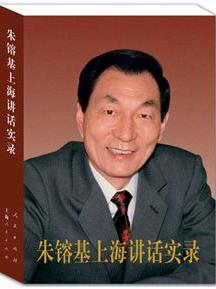
This depends on two competences: being capable and having a will. In the initial stage for reform and opening-up, Zhu Rongji hadn’t held a job in government: after being the director of the Institute of Industrial Economics of China Academy of Social Sciences, Zhu acted as the president of Tsinghua University School of Economics and Management. He was skilled in handling economic affairs, and this was very obviously embodied in a large amount of internal speeches in The Authentic Speeches of Zhu Rongji. In fact, such an ability of Zhu even has made him be somewhat overconfident.
But what was more important was that Zhu Rongji was willing to promote reforms. In 1952 Zhu was a deputy director, and in 1978 he was promoted to a director at the age of 50. The progress made in politics was very small, and in the period of nearly 30 years, he mainly worked in the system of the Planning Commission. This also caused that Zhu Rongji had many complaints on the system of the Planning Commission. When he was promoting reforms, he didn’t like people in such system. Even in order to bypass the Planning Commission, he established the State Economic and Trade Commission to deal with SOEs management and commodity circulation etc. He promoted a large amount of high-educated officials that were more inclined to trust market. These were all the major causes which Zhu Rongji looked upon as more market-oriented. In the negotiations of the accession to the WTO, SOEs, the Planning Commission and financial enterprises were main opponents; obviously their appeals hardly could form more pressures on Zhu Rongji. This was the major reason that Zhu was willing to concede in the negotiations of the accession to the WTO. In 2002, he once said that “if we protect ourselves, though we can be protected, we are unable to develop ourselves. If relevant reforms are not carried out in many our systems, we cannot adapt to the economic globalization. Enterprises will also be inefficient and uncompetitive with soft budget constraint.
Furthermore, the success of the negotiations of the accession to the WTO cannot be separated from the style of Zhu Rongji. As a senior official, Zhu handled affairs directly and problem-solving-oriented. Even when he ranked at high posts, it was also common for him to solve crises by himself. When he broke up the debt chains, he was Vice Premier and director of the Production Office of the State Council and director of the Office of Economy and Trade; when the tax sharing reform was carried out, he went into battle by himself, and took Liu Zhongli, the finance minister, to negotiate with provincial governors and secretaries of provincial Party committees one by one; in the period of overheated economy, he held the post of president of the Central Bank concurrently, and rectified credits by himself. Such behaviors were very rare on Li Peng, his predecessor, and Wen Jiabao, his successor. Negotiating with provincial governors and secretaries of provincial Party committees face to face on the topic of tax sharing with the identity of Executive Vice Premier and member of the Standing Committee of the Political Bureau, the successful probability of course was much higher than that of the finance minister who negotiated by himself. For the success of the accession to the WTO, the key achievement was to persuade the U.S. to agree. And the achievements gained in the negotiations when he went to the U.S. in April 1999 were the most important. At that time, the working team led by Zhu Rongji negotiated with the U.S. for six days and nights. For all the differences, Zhu Rongji made decisions on the spot, and he was present and personally participated in the last day’s negotiation. If not so, whether consensuses could be reached with the U.S., I’m afraid there would be many variables.
Of course, the essence of having a will is being responsible, for carrying out reforms, mistakes will surely be made. The key lies in whether or not someone is willing to take the consequences. In the reforms of Zhu Rongji, he handled many matters, naturally he made many mistakes, and big errors were as many as successes. For example, the grain circulation system as a whole was a failure. In the reforms of labor market, real estate, finance and taxation etc, there were also many unfinished matters in the reforms, and these malpractices have rather serious negative effects even today. Some of them had never been considered, for some others, though they were intended to be changed, they were no strength to carry them out. Among them, at the beginning of most reforms, there were many disputes, and there were no final conclusions. Though there was the factor of being pushed by the general trend of events, for the reason why Zhu Rongji dared to make decisions, the personal determination was an indispensable factor. At this point, Wen Jiabao is tarnished by comparison. Before carrying out reforms, no one can predict the results. If the society is required to reach consensuses at this time, and if reforms will be started only after all ministries and commissions have reached consensuses, then basically nothing can be changed. Basically it has been so for the ten years, for many matters, even if consensuses have been reached, but due to the benefit entanglement of ministries and commissions, standstill will still appear. For example, the family planning, reeducation through labor and factor price control were all like so, missing great good opportunities.
At the historical moment of economic development, courage is needed. In this regard, Yu Yongding once said, “the opportunity of reforms should be seized by politicians, but delay is not the way out.” Having the courage to face challenges that will be judged by history, this may be the best assessment for the character of Zhu Rongji.
Originally published on Phoenix Weekly | 2013-8-15


