

The timing for RMB capital account liberalization
Recently, on the 2013 annual conference of “Restarting the Strength of Opening up” sponsored by Liu Hongru Financial Education Foundation, SIFL Institute and Reinventing Bretton Woods Committee, the honored speakers had heated discussion on whether the RMB capital account liberalization should be promoted in the next three years.
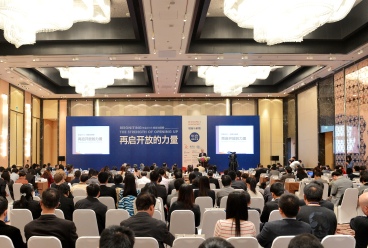
He Fan, deputy director at the Institute of World Economics and Politics (IWEP), Chinese Academy of Social Sciences (CASS), believes that the timing of capital account liberalization is very important. If the promotion of capital account liberalization will be speeded up in the next few years, there will be many reform pressures in China, for example, many non-performing assets in China’s banking system may be gradually improved. If the real estate prices fall, the strike for the banking system will be very great.
Huang Haizhou, the managing director and head of Sales and Trading Department of China International Capital Corp., believes that the best timing for China’s capital account liberalization should be the past period during 2003 to 2007, “but the best timing may be rather difficult to judge. Now for the most important matters, the first one is to see clearly the general direction, the second one is to promote as long as having a chance, and the third one is to establish the relevant insurance mechanism.” Huang Haizhou thinks that if the U.S. chooses to quit QE slower than market expectation, the pressure of the emerging market will be smaller. At this time, there is nothing to worry about for China for the problem of capital outflow, and the force for the liberalization of capital accounts can be greater.
But He Fan expresses different ideas. He Fan believes that the reforms of marketing domestic factor prices should be prior to the capital account liberalization. Because there’s no strict restriction for foreign investments, especially for FDI, and what has not yet been opened in most cases is the short-term capital. “If the opening is for promoting reforms, the more reasonable method is to put more energies into the aspect of access and to allow some foreign capital institutions to come to China for competition. In this process, competition will bring about the learning mechanism and generate the effects that China’s manufacturing industry once gained.” He Fan believes that if the short-term capital account is liberalized while domestic factor prices including interest rates are still suppressed, “it is very likely to invite speculators to China. As wrong pricing will appeal speculations, it will be very troublesome for the opening when the pricing is wrong, and once the opening begins, it’s very hard to close it again.”
Sun Lijian, vice-president of the School of Economics of Fudan University, believes that the correct order can postpone the outburst of crises, but under a wide-open status, the biggest problem is still whether the industrial structure and factor price are matched.
In the view of Sun, when in the 1990s of the last century before the financial crisis in Asia broke out, according to the requirements of textbooks, East Asian countries typically corrected the practices of Latin American countries that disregarded the order. But the key factor that actually leads to conflictions is still that the industrial structure of a country can not conform to the market environment where the factor prices are opened. “At present, including Japan, today they have returned to the stage of controlling factor prices again, and they have maintained low interest for a long time so as to ensure their industrial competitiveness.”
He Fan proposes that the present first task is to basically control the financial risks that may appear and make the related risk estimation, for example, the audits on local government debts should be strengthened. Besides, through the risk signals, all financial institutions should realize that the situation in the next few years will be quite different with that of the past. Finally, they have to wait until the factor prices gradually reach a relatively balanced level. Viewing from the international environment, they should wait for consideration at least till the time when the international financial market becomes rather stable. In this process, if the subitems under the capital financial accounts are subdivided, for those subitems that contribute to foreign trade and investments, the efficiency should be further improved and facilitated. “But we must be very cautious for the final gateway of the short-term capital movement, and for the sequence, it should be ranked a little bit behind.”
(caixin.com | Reporter: Du Ke | 2013-11-4)


