

Nongovernmental Voices on Public Issues
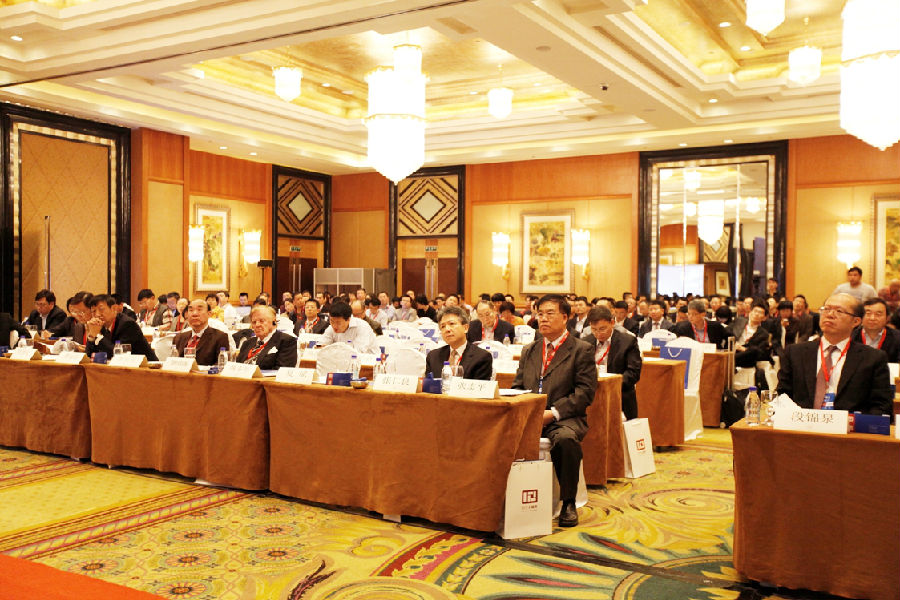
> The above is the 2012 annual conference of SIFL
On February 27, 2013, the 31th conference of the eleventh session of the Standing Committee of the National People’s Congress came to a close. The Amendment of the Budget Law that was once thought to be passed at the session of meeting finally failed to be placed on the agenda in this conference, and becomes the “future task” for the new government.
To a great extent, the delay to Budget Law amendment is due to the wide public attention and the heated debates of experts and scholars after the second version of the draft was made public. The draft amendment to China’s Budget Law has received nearly 331,000 comments and suggestions from about 20,000 members of the public within a month, which is the second most since the legislature began seeking public opinions online in 2005.
Many fiscal law experts and research institutions even provided professional opinions for the aspects of the attribute positioning of the Budget Law, the power of decision and supervision rights for budgets by the National People’s Congress etc.. Among them, nongovernmental think tanks including Shanghai Institute of Finance and Law (SIFL) and Unirule Institute of Economics are making their efforts.
On July 25, a seminar on Budget Law Amendment was co-hosted by SIFL and Research Institute of Economic Thought and Economic History. And participants carried out heated debates on the purpose of legislation, principles of the Budget Law and specific legal provisions. The consensus was achieved for the direction and framework for the revision of the Budget Law, and specific revision opinions were put forward for the clauses.
After the meeting, SIFL delivered the discussion results with more than ten experts’ joint signatures to the Commission of Legislative Affairs of the National People’s Congress in form of the express mail service, and soon the reply was gained, and the Commission of Legislative Affairs of the National People’s Congress indicated that the comments made by the seminar were very important, and would take them for reference in the future amendment work.
In the views of Fu Weigang, the executive president of SIFL, this is just one of the effective attempts of independent think tanks to play a role and generate influences for government policy decisions. As one of the most active nongovernmental think tanks at present, it has taken 11 years for SIFL to prove that though it still faces various problems and dilemmas, the nongovernmental think tanks are still striving to explore the ways that can exert influences on the government in public policy-making.
The nongovernmental think tanks that have gradually become stronger
In October 2002, when Liu Hongru, an important figure who once promoted China’s financial marketization reforms and the first president of China Securities Regulatory Commission, retired, together with famous law Professor Li Buyun and Liu Hongru’s students, they registered in Shanghai Civil Affairs Bureau to establish a private and non-profit research institute —SIFL.
As a research institute with pure private funding for its establishment, their original intention were quite simple, that is, besides the strong official and semi-official think tanks, they would detach themselves from governmental and departmental benefits, and provide high quality analysis schemes for government decision-making through objective and neutral professional studies.
Benefitting from the reputation of the founders, in 2003, Shanghai Municipal Party Committee invited SIFL to carry out a research of “world urban legalization governance.” Through the combing of indexes of rule of law in cities of New York and Tokyo etc. by SIFL’s experts, the general experience of world urban legalization governance was summarized, providing experience for Shanghai to build a legalization international metropolis.
In December 2004, on the study meeting of “thinking on the work of ruling the city by law” held at the enlarged meeting of Shanghai Municipal Standing Committee, the professor in charge of the research group introduced the research achievements and gained officials’ appreciation, winning the first success for SIFL.
Soon afterwards, SIFL cooperated with the Central Policy Unit of Hong Kong Government that studied policies, carried out the research of “financial openness and financial risks” and gained the recognition of the Special Administrative Region Government. Since 2007, an annual meeting with different topics related to China’s transformation has been held each year, and since 2009, the academic meetings titled “SIFL Seminar” have been carried out. In the recent two years, SIFL invited experts to carry out the research project of “Urbanization and Debt Risks of Local Governments”. Soon, the research achievements relates to China’s urbanization and debt risks of local governments will be put forward and the content etc.
Up to now, the research fields of SIFL have covered macro-economy and finance, regions and industries, energy and the environment, and health and medical treatment etc. And SIFL has released its achievements through research reports, publications, conferences and symposiums, and media etc., and has provided highly efficient and specific analysis for policies and suggestions on decision-making.
In 2007, when the Transition Institute, another nongovernmental think tank that was established in Beijing, started, it experienced some twists and turns. After the period of the 1980s to the 1990s in last century when the development of nongovernmental think tanks was rather relaxed, in the first half year of 2005, the State Administration for Industry & Commerce of P.R.C. carried out the action of the standardization for the registration of enterprise names, and required that all research centers and institutes shall be registered again as companies. Though the Transition Institute confessed that it was a NGO of research type, it was still limited by such a regulation, so the Transition Institute only had to be established in the name of a consulting co., Ltd. at the Industrial and Commercial Bureau. It meant that the institute had to make efforts in filling in the report forms of business tax and individual income tax etc. each month, like commercial companies.
But Huang Kaiping, the executive president of Transition Institute, also says frankly, though facing many limitations, the government does not close the access for nongovernmental think tanks, and it basically can endure their development.
Funds shortage is no longer the key problem
At present, the annual operation funds of SIFL have reached 3 million to 4 million yuan. Though it cannot compare with famous think tanks in western countries, it belongs to a rather high level in China’s nongovernmental think tanks. Various donations not only can provide sufficient fund supports for research issues, but also sometimes can gain a surplus which can be served as the institutional development funds for continuing and expanding researches.
To some extent, the amount of funds is one of the most important embodiments of the society on the demands of nongovernmental think tanks. It is reported that the fund sources of SIFL have both the donation of investment enterprises and also governmental funds. Since 2007, there were also individuals who provided donations. Some funds belong to special investments and shall be used on appointed research issues. For other funds, though there are no appointed uses, SIFL needs to provide its financial statements each year.
There was an expert who once asserted that the Chinese were unaccustomed to buying ideas. But in Fu Weigang’s views, such a saying is not correct. In the enterprise donations gained by SIFL, the domestic private enterprises always occupy a large proportion. Most enterprises actively come to SIFL after seeing its research achievements.
Fu Weigang thinks that with the accumulation of China’s fortune, more and more private enterprises wish to participate in the discussion and formulation of public policy-making and give their opinions. The positioning of nongovernment think tanks in the eyes of the common people is also changing, many people realize that think tanks are not only the advisers for the government, but also they can reflect social public opinions and influence the governmental public policy-making from bottom to top. In the future development plan, SIFL wishes that the annual operation funds may reach 10 million yuan.
At present the Transition Institute owns the annual average operation funds of around 1 million yuan, and even all comes from the donations of private enterprises, investment companies at home and abroad and foundations. There has never been a problem for gaining funds in the development.
Bottleneck of Talents
In recent years, though officials from the State Council to local governments all show emphasis on the development of think tanks, the relevant legislation and systems are still imperfect, causing that nongovernment think tanks are influenced in the aspects of registration and favorable policies of fiscal and taxes. However viewing from SIFL and the Transition Institute, the biggest problem is the bottleneck of talents.
Taking SIFL as an example, though most of the researchers who participate in projects are doctors or above doctorate levels, among them, there are only 9 full-time researchers, and the other 30 persons are all part-time.
Fu Weigang believes that the reason of such a situation is neither that the funds of the Institute are not sufficient for inviting more scholars, nor that the treatment for working here is lower than that of other research institutes, and the main reason lies in the problem of ideas. Under the situation of the monopoly of Chinese official think tanks, more high-level scholars prefer to do research in research institutions sponsored by the government and universities, and they think that in those places, it is more stable, the resources are more abundant, and the achievements are more likely to get attention. “The goal for the current stage is to expect that the full-time staff will be expanded to 15 persons.” Said Fu.
The Transition Institute is also facing the same kind of problem. Compared with SIFL, the research institution that was founded in 2007 is more active and younger. The founders of Guo Yushan and Huang Kaiping are at same age and knew each other well since in their university days. They are all interested in issues of public policies. After graduation, they were unwilling to work as civil servants in governmental departments, and they wished to have a platform for carrying out free researches on issues that they were interested in, so they established the Institute.
Huang Kaiping indicates that there are now altogether 15 researchers who are all full-time in the Institute, and though their educational levels differ from bachelor degree to doctorate, they are all young people who have a common goal. Their average age is 30, and the oldest one also belongs to “the generation after the 1970s.” With the expansion of the research fields, it is obvious that the current researchers are not sufficient, but due to the influence of traditional ideas, it is also difficult to attract high-level professionals.
“We hope to display the working and life styles outside the system to young scholars through our own experience and attract them to join us,” says Huang Kaiping.
Learning to Make Contacts with the Government
Though there is an opinion that if a nongovernmental think tank wants to be independent and objective, it should completely break away from the government and should not take a penny from the government, and should not serve any governmental departments. But actually, how to deal with the relationship with the government is a problem that nongovernmental think tanks in any country have to face.
Taking Brookings Institution in the U.S. that ranks first in the world in the Global Think Tank Report as an example, its research achievements have always been regarded as independent, objective and impartial. But it also pays special attention to the participation in the government policy decision-making. In the aspect of the domestic policy design in the U.S., it is in a dominant position. It not only receives funds from the government, but also collects high amounts of fees from the consultation meetings provided by governmental officials. Many experts are retired governmental high-rank officials, and due to the good relationship with the Democratic Party, some researchers have entered the government and undertaken important positions in the period when the Democratic Party is in power.
The U.S. RAND Corporation that is well known by the Chinese also influences a series of the decision-making of important affairs of politics, economy, military affairs and foreign affairs etc. Many contracts of RAND Corporation are signed with the federal government, and the government and the military are always its biggest clients. At present, 65% of the source of income of RAND Corporation is from it. But through a set of perfect examination mechanism and the internal regulations of “protecting strange views” etc., RAND is still regarded as the example of an independent nongovernmental think tank, and its research achievements are regarded as being objective and not representing any factions.
In China, the core goal of most nongovernmental think tanks is nothing more than that through its own research achievements, it may provide consultation services for the country’s public decision-making, and provide schemes for solving specific problems. It means that no matter whether the nongovernmental think tanks are willing or not, they must learn to make contacts with the government.
For a long time, China’s nongovernmental think tanks have always been weighing and considering the best pattern of getting along with the government. On the one hand, the civil think tanks wish that the decision makers can hear their own voices, and on the other hand, the relationship with the government should not be too intimate so as to avoid the influence on the objectivity of the researches.
In the Development Report of China’s Think Tanks (2011) complied and written by the Research Institute of the Development and Reforms of China’s Eastern, Middle and Western Regions, it summarizes that the best distance among think tanks and governmental agencies should “be neither close nor distant.” “The seemingly close relationship” may lead nongovernmental think tanks to own more relaxed environment, gain the trust from the government, and gain a large amount of research resources, so the achievement release channels are more unblocked. “The seemingly distant relationship” is rather complex, including that a broader visual field and pattern should be maintained in the research process, the departmental benefits should be detached; and the fund resources should be as diversified as possible.
But such a degree is not easy to master. There are often nongovernmental think tanks that are regarded as troublesome institutes by the government and are limited and pressured in their development because they “dare to say too much.” SIFL that has undertaken the research projects entrusted by the government many times seems to handle the relationship quite well. Fu Weigang says that the selection of research issues by the Institute is more specific and practical; not taking the way of “crying out,” but mainly through the technicalization means to provide highly efficient and feasible reference schemes for the specific public decision-makings for the government. Through the more marketization means to solve the social development problems and making the formulation of policies have more competitiveness, it is also the feature that the Institute thinks that it differs from other nongovernment think tanks.
The specific practice is that SIFL invites famous experts and officials who are familiar with the governmental decision making procedures to establish an academic committee that is responsible for the selection, planning and examination and supervision for the issues, and ensures the researches being carried out are specific and have clear aims. Famous scholars at home and abroad and governmental officials are often invited to participate in the forums and annual conferences held by SIFL. The suggestions put forward on the Budget Law are received by the Commission of Legislative Affairs of the National People’s Congress, and it is a proof showing that nongovernmental think tanks give play to their influences.
Comparing with SIFL, the Transition Institute almost has not made contacts with the government directly in the recent years, but the research topics of the development of taxi industry and tax system reforms are all related to public policies. The way that they show their abilities to the government is the active participation in promoting the research achievements through various media interviews, and at the same time, they send reports to relevant departments. Huang Kaiping disclosed that, after the Institute sent the research report on financial and tax reforms to tax departments, there were personnel from relevant departments actively visited the Institute for exchanging experience.
Originally published on Phoenix Weekly | 2013-4-25


