

China’s economic growth and social mobility
On December 4th, Yan Se, professor of Guanghua School of Management in Peking University, senior economist for China with Standard Chartered Bank, shared his views of how to improve economic growth and social mobility in China’s transition period on the 18th Hongru Forum.
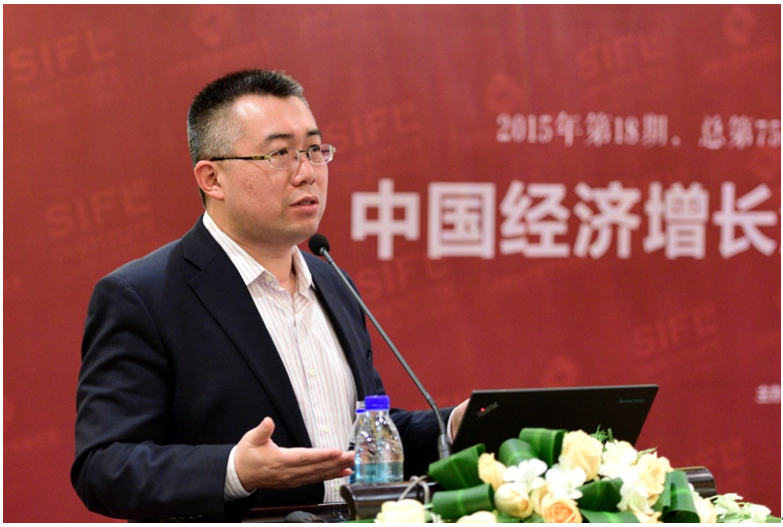
Professor Yan generalized the current economic conditions around the world, which is developed economies are generally in the state of gentle recovery while on the other hand emerging economies are still mired in hard process of recovery. For China, despite the uncertainties, foreign demands are still in recovery, which is helpful to the stabilization of macro economy. However, as economic growth engine is faced with transition from the old to the new, it is not realistic to maintain GDP growth rate in the future by relying on investment and foreign trade. Consumption has become the key driving force for the current economic growth and the contribution to GDP by the service sector has surpassed over a half.
In short terms, local debt restructuring of debt swap guarantees the relative stability of local governments and commercial banks,the cross-regional labor force inflow maintains the balance between demand and supply in the labor force market and the risks of China’s economy and society is under control.
However, if China’s economy continues to be weak in the long-term, then China will inevitably fall into the middle-income trap. From historical experience, most countries can get rid of “poverty trap” but few can escape from the middle-income trap.
As for the reasons, Professor Yan believes that it is due to the different economic growth pattern in different economic development stages. In the factor-driven stage to transcend the “poverty trap”, the input of such production factors as low costs of labor force and natural resources can contribute to 60% of economic growth. Yet once the poverty line of 3000 dollars GDP per capita is broken, simple input of factors will no longer be the utmost driving force. Therefore, measures must be taken to change economic growth model to improve efficiency. The stage is also the dividing line between countries with middle income level and developed countries.
In the year of 2015, the GDP per capita in China will surpass 7000 dollars so that China will become typical middle-income country. Yet as the current economic growth is in a lack of driving force and marginal returns brought by the increase of factors input are going down, the demographic dividend is quickly disappearing. With the going down of fertility, China’s society is faced with the unfavorable future of becoming old before getting rich. Population aging has not only uplifted labor costs but has also increased the proportion of social supporting, making the pressure of social insurance higher.
In the transition period of economic driving mode, how to realize long-term economic growth through improving efficiency? Professor Yan thinks the key is to increase the distribution efficiency in all the factor markets to release the reform dividend. Furthermore, the key factor to avoid middle-income trap is to improve social mobility to realize the accumulation of human capital and constant innovation. However, without real rules for fair competition, the vested interests groups have strong motive and ability to decrease social mobility.
In the first two decades of reform and opening up, the social mobility is rather high in China. Yet in the past over 10 years, social stratification has solidified whose tendency is the same with the rule in other middle-income countries. Professor Yan pointed out, building market rules that respect fair competition is crucial to improve social mobility. On one hand, we need to turn from material capital investment to human capital investment to eliminate the imbalance in education and health. On the other hand, we must advance the Hukou reform to ensure opportunity fairness and get rid of systemic discrimination. In the meantime, he calls for public institutions, enterprises and social organizations to collectively undertake the responsibility of improve social mobility.


