

Emerging market should be vigilant on sutflow of foreign capital
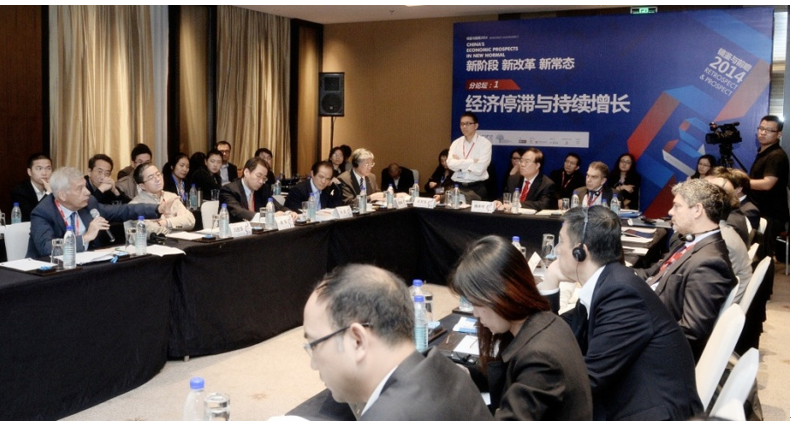
Currently, global economy has been assuming a polarization trend that American economy continues to revive and increase, while Europe, Japan and other economies are in confrontation with risk of growth slowdown or even retrogression. Many experts in the forum of “China’s economic prospects in new normal”, which was jointly hosted by Liu Hongru Financial Education Foundation and SIFL Institute a few days ago, thought emerging market countries should be vigilant on the impact brought about by outflow of foreign capital due to increasingly obvious difference among monetary policies of globally main economies.
The return of funds to America will be a shock to emerging markets
“In past five or six years, there was a tremendous quantity of capital inflow to the emerging market countries in a very extensive range.” Anoop Singh, the head of regulatory strategy and policy for Asia Pacific of J.P. Morgan and former director of IMF Asia and Pacific Department, thought that these foreign capitals into emerging economies were mainly their debts or investments in these host countries’ stock markets. With America’s statement to withdraw from QE policy recently, the market’s expectation on interest rates increase is also warming.
This may result in capital backflow to America, whose impact on emerging market countries should not be neglected.
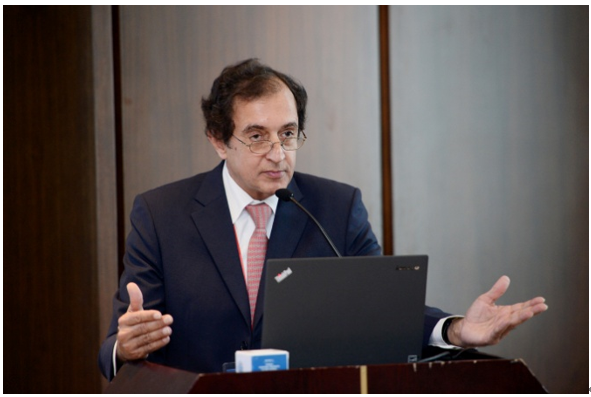
As representatives of emerging market countries, the economic growth future of BRICs draws more attention from the market. As for this, Gene Ma, the director of China economics and strategy at Tudor Investment, denoted that there will be two events in the next year that will bring huge impact on BRIC countries: one is the impact brought about by changes in energy price, the other one is interest rates hike by the Fed. Specifically speaking, the impact on different countries from energy price fluctuation is different. The increasingly downward energy price is unfavorable to Russia, the Middle East and other oil exporters, but it is favorable to India, etc.
Currently, the market’s expectation on interest rates increase of the Fed in 2015 is warming. Gene Ma denoted that no matter the monetary policies of the Federal Reserve and European Central Bank, or the monetary policies of other main economies, they would be looser in fact, and the actual time for interest rates increase might continue to be postponed. He thought the probability was not big about whether severe impact would be caused on the emerging market after interest rate increase of the Fed in the future just like the Asian financial crisis in 1998. On one hand, the economic scales of emerging economies have increased a lot; on the other hand, the emerging economies have more abundant experience in handling crisis. Moreover, the countries’ increase in foreign reserve also strengthens their capability to fight with the crisis. As a whole, the impact brought by interest rates increase in the future on emerging markets will be less than that of before.

Bulk commodity marketis faced with challenges
It’s noteworthy that there appears a large fluctuation in price of bulk commodities due to difference in growth speed of world main economies since this year and polarization of monetary policies of various countries. The price of crude oil, base metal and agricultural products appears a sharp glide. This has severely impacted the emerging market countries relying on export of raw materials.
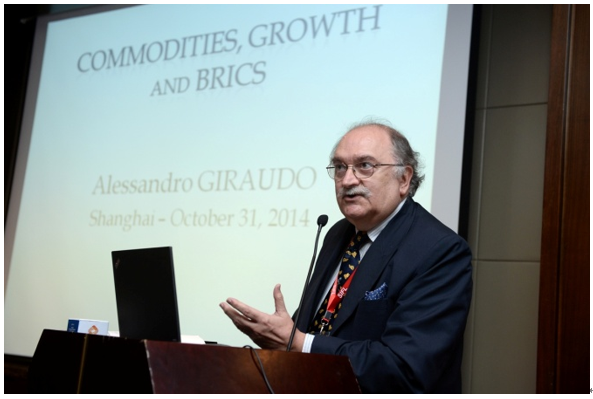
“There is difference between agricultural products and industrial products when seeing from the price operation cycle of bulk commodities, and its impact on different countries is also different”. Alessandro Giraudo, the chief economist of France Tradition Group, denoted that the price cycle of agricultural products was relatively short and could be revised quickly in the next cycle if the price rose or fell. However, the cycle of industrial products was different; it was usually medium and long term and normally 7-15 years.
As for the overall weakness assuming in price of global bulk commodities currently, Giraudo held the view that this might be dated back to the price adjustment of bulk commodities since the end of 2012; on one hand, it was because continuing appreciation of dollars, on the other hand, it was because the investors’ worry on weak global economic recovery process. Copper, aluminum and other base metal also play a role of part of financial mortgage. In addition, the price of bulk commodities, like base metal, energy and so on has appeared a continuing fall in the background of fading market speculation atmosphere.
Giraudo denoted that the fluctuation of the price of any commodities was all a process of wealth transfer, as well as a transfer process of purchasing power between consumers and producers. This kind of wealth or purchasing power redistribution will be utilized by the market, and many people will benefit from this. As a whole, the rise in price of bulk commodities will bring earnings to the BRIC countries, while the decline in price of bulk commodities will firstly exert an impact on BRIC countries in return.

There are 5 key points for China’s economic reform. Firstly, we should pay a great attention to supplementary reform while promoting financial reform. Secondly, we have to enhance the total factor productivity under the new normal, and its important approach is financial reform and related supplementary reforms. Thirdly, we need to pay close attention to the order of financial reform in order to avoid financial crisis. Fourthly, there are some statements in China that we need risk to drive reform and seize the opportunity to reform in a timely manner, the premise for which is we can discern the risk and deal with it. Fifthly, the flexible exchange rate is not for the balance of payments or the independence of monetary policy, but for avoiding the risk of a sustained overvalued real exchange rate.

According to the data of the Department of Statistics, China’s working-age population has begun to decline since 2012, which will cause China to be plunged into middle-income trap before accomplishment of industry upgrading. Therefore, the 15 years from 2015 to 2030 is of vital importance to China. If China wants continuous development for its economy and step over the middle-income trap, it must undergo in-depth structural reform and market reform and improve rule of law, etc. so that its per capita GDP will reach 30,000 after 15 years even though its economic growth speed was 2.5%, under which case the Chinese can enjoy rich retired life then; if China fails to make some improvements in next 15 years, it may be stuck in middle-income trap.

As for the current situation, I don’t think China’s economy has entered the so-called new normal whose growth speed is less than 7.5%. When converting the per capita income between China and America according to PPP, China’s per capita income is only 23% of that of America currently, so that there is still a large potential for growth. With our income increasing, the economic growth speed will certainly slow down. However, this is a slow process, and doesn’t mean China’s economy will come to a rapid decline recently.
The difficulties in economic growth faced by China recently are, to a large extent, a result of the central government’s overly cautious macroeconomic policies for the reason that the large-scale debt and interest burden formed several years ago have made the current monetary policy fail to release liquidity to the economy again under the present situation, which is of too high financial risk. I think, in this case, the government should launch a large-scale and more proactive fiscal policy as soon as possible and write-off the 15-20 trillions of debts by issuing bonds to adjust the liquidity level needed by the economy. Once the debt deadlock is untied, China will soon come back to the economic growth of above 8% in the future.

The new normal in next few years faced by China, or faced by the world, may not be the problem of general decline of potential growth rate, but some long-term factors at the demand side, which may result in continuous tiredness and weakness of total demand growth. It is difficult to deal with these long-term factors through total-quantity control of monetary policy. The fiscal policy should play a larger role. Under the current context, the fiscal policy should be relaxed, namely, to reduce tax in a large scale in combination with total quantity and structure.


